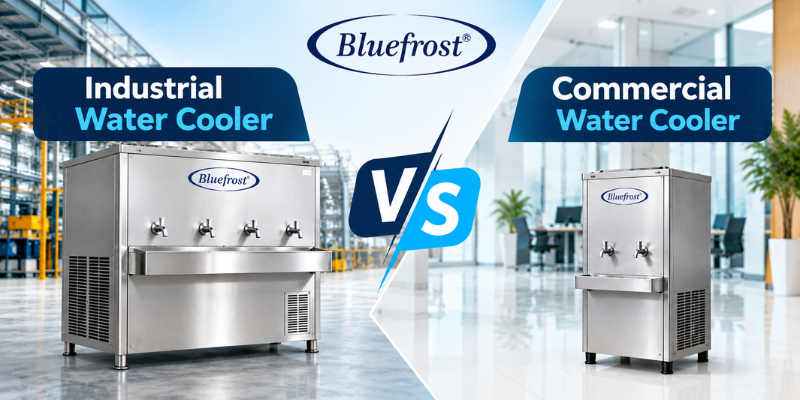
Industrial Water Cooler vs Commercial Water Cooler Choosing between an industrial water cooler and a commercial water cooler depends on the facility’s size, number of users, daily drinking-water demand, operating hours and installation requirements. While both provide chilled drinking water, their suitable applications and configurations can differ. This guide explains the key differences between industrial and commercial water coolers to help businesses select a suitable solution. What Is an Industrial Water Cooler? An industrial water cooler is designed for workplaces and facilities where drinking-water demand can be relatively high. It may be used in factories, manufacturing plants, warehouses, industrial campuses and large workforces. The suitable configuration depends on factors such as user volume, daily water consumption, cooling requirements and available installation space. What Is a Commercial Water Cooler? A commercial water cooler is generally used in offices, schools, hotels, restaurants, retail spaces and other commercial environments where regular chilled drinking water is required. The required model can be selected according to the number of users, expected water consumption, operating hours and available space. Industrial Water Cooler vs Commercial Water Cooler Feature Industrial Water Cooler Commercial Water Cooler Application Factories, manufacturing plants, warehouses & industrial facilities Offices, schools, hotels, restaurants & commercial spaces Usage Higher or regular workplace demand Regular commercial drinking-water demand Capacity Selected according to higher user and water requirements Selected according to commercial usage Cooling Suitable for demanding workplace environments Suitable for regular commercial use Configuration Based on facility and project requirements Based on site and user requirements Operating Hours Suitable for extended workplace operations Suitable for normal commercial operations Installation Planned according to site conditions Generally planned according to available space Maintenance Regular commercial/industrial maintenance Regular equipment maintenance Actual specifications and configurations vary according to the equipment model and application. Key Difference Between Industrial and Commercial Water Coolers The main difference is the application and expected usage requirement. Industrial water coolers are generally considered for facilities with larger workforces or higher drinking-water demand, while commercial water coolers are commonly used in offices and other commercial locations with regular user requirements. The right choice should be based on actual water consumption rather than simply selecting a cooler based on its category. How to Choose the Right Water Cooler? Before selecting a water cooler, consider: Number of users Expected daily water consumption Peak usage periods Operating hours Required cooling performance Storage requirement Available installation space Water source and installation conditions Maintenance access For factories and large industrial facilities, user volume and operating hours can be particularly important. For offices, schools, hotels and similar locations, regular daily consumption and available space may be the primary considerations. Industrial vs Commercial Water Cooler: Which One Should You Choose? Requirement More Suitable Option Large manufacturing facility Industrial Water Cooler Factory with multiple shifts Industrial Water Cooler Warehouse with larger workforce Industrial Water Cooler Corporate office Commercial Water Cooler School or college Commercial Water Cooler Hotel or hospitality facility Commercial Water Cooler Restaurant or food court Commercial Water Cooler Large industrial campus Industrial Water Cooler Facility with uncertain demand Select based on calculated water consumption These are general application guidelines. The final equipment should be selected according to the actual site and water requirements. Why Choose BlueFros? BlueFros provides drinking-water cooling equipment for industrial, commercial and institutional applications. Equipment selection can be based on user volume, daily water consumption, cooling requirements, storage capacity and installation conditions. Businesses can explore suitable solutions according to their specific application rather than using the same configuration for every facility. Frequently Asked Questions 1. What is the difference between an industrial water cooler and a commercial water cooler? An industrial water cooler is generally selected for facilities with higher user volumes or demanding workplace conditions, while commercial water coolers are commonly used in offices, schools, hotels, restaurants and other commercial locations. 2. Which water cooler is suitable for a factory? An industrial water cooler can be considered for factories based on the number of users, daily water consumption, operating hours and required cooling capacity. 3. Can commercial water coolers be used in offices? Yes. Commercial water coolers are commonly suitable for offices and other workplaces requiring regular access to chilled drinking water. 4. How do I choose the right water cooler capacity? Consider the number of users, expected daily water consumption, peak usage, operating hours and cooling requirements before selecting the appropriate configuration. 5. Are industrial water coolers suitable for warehouses? Yes. Suitable industrial water cooler configurations can be considered for warehouses with larger workforces and regular drinking-water requirements. 6. Does BlueFros supply industrial and commercial water coolers? BlueFros provides drinking-water cooling equipment for industrial, commercial and institutional applications, with selection based on facility requirements. An industrial water cooler is generally selected for facilities with higher user volumes or demanding workplace conditions, while commercial water coolers are commonly used in offices, schools, hotels, restaurants and other commercial locations. An industrial water cooler can be considered for factories based on the number of users, daily water consumption, operating hours and required cooling capacity. Yes. Commercial water coolers are commonly suitable for offices and other workplaces requiring regular access to chilled drinking water. Consider the number of users, expected daily water consumption, peak usage, operating hours and cooling requirements before selecting the appropriate configuration. Yes. Suitable industrial water cooler configurations can be considered for warehouses with larger workforces and regular drinking-water requirements. BlueFros provides drinking-water cooling equipment for industrial, commercial and institutional applications, with selection based on facility requirements. Choose the Right Water Cooler for Your Facility Not sure whether you need an industrial or commercial water cooler? Share your number of users, daily water requirement, application and installation requirements with BlueFros. Our team can help you identify a suitable water cooling solution based on your facility requirements. Call: +91 9355534074 | +91 7042104170Email: info@bluefros.com Contact Form Full NamePhone No.EmailYour MessageSubmit Form

Uncategorized
Water Dispensers Buying Guide
- admin
- October 3, 2026
- No Comments
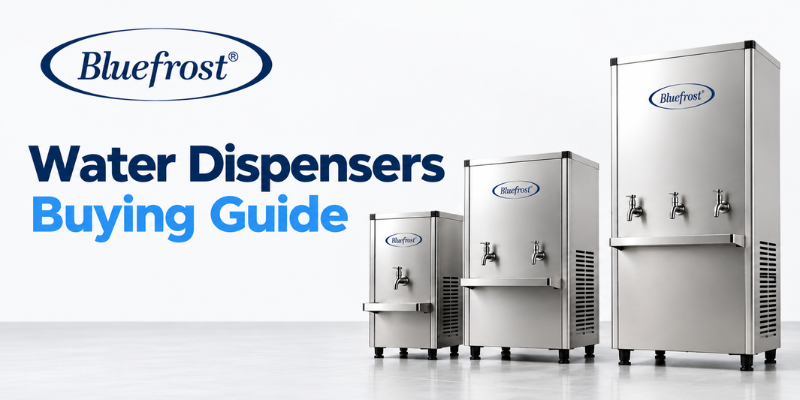
Water Dispensers Buying Guide: Types, Features, Capacity & Selection Tips Choosing the right water dispenser depends on more than price or appearance. The suitable dispenser should match the number of users, daily water consumption, dispensing requirements, cooling needs, available space, and operating conditions. Different facilities have different drinking-water requirements. An office may need a different dispenser configuration from a factory, school, hospital, warehouse, or commercial facility. Therefore, comparing the specifications and intended application before purchasing can help identify a suitable water dispenser. This Water Dispensers Buying Guide explains the main types, important features, capacity considerations, and factors to evaluate before selecting a water dispenser. What Is a Water Dispenser? A water dispenser is equipment designed to provide drinking water through one or more dispensing points. Depending on the model, it may provide normal-temperature or chilled water.Water dispensers are available in different sizes, capacities, materials, and configurations. The appropriate option depends on the intended application, number of users, and expected water demand. Types of Water Dispensers Standard Water Dispenser Standard water dispensers are generally used where drinking-water requirements are moderate. They may be suitable for offices, small commercial spaces, and other locations with relatively lower user demand. Stainless Steel Water Dispenser Stainless steel water dispensers are commonly considered for commercial and institutional applications. Stainless steel can provide durability, corrosion resistance, and ease of cleaning. The specified material grade should be checked before purchasing. Industrial Water Dispenser Industrial water dispensers are intended for locations where regular or higher-volume drinking-water dispensing may be required. Factories, manufacturing facilities, warehouses, and large institutions may have different requirements depending on workforce size, shifts, and daily consumption. Water Dispenser Requirements by Application Different facilities have different usage patterns. The requirements may include: Office: Employee count, daily water consumption, and available space. Factory: Workforce, operating shifts, peak usage, and cooling requirements. School: Student count, peak usage, and number of dispensing points. Hospital: Staff, patients, visitors, and operating hours. Warehouse: Workforce, working hours, and installation space. Commercial Facility: User volume, daily water demand, and operating conditions. Actual requirements can vary depending on the facility’s usage pattern and operating conditions. What Should You Consider Before Buying a Water Dispenser? Before purchasing a water dispenser, evaluate the factors that can affect its suitability for your facility. Number of Users The number of users affects the expected drinking-water demand. Consider employees, workers, students, patients, visitors, and users across different shifts. Daily Water Consumption Estimate the approximate amount of drinking water required each day. This can help determine the suitable capacity and configuration. Cooling Requirement If chilled drinking water is required, check whether the dispenser provides cooling and whether its cooling capability is appropriate for the expected usage. Storage Capacity Storage capacity determines how much water is available for dispensing. It should be considered along with daily consumption and peak usage. Installation Space Measure the available installation area and consider sufficient access for cleaning, maintenance, connections, and drainage where applicable. Water Dispenser Buying Factors When comparing different models, consider the following factors: Buying Factor What to Consider Number of Users Expected number of people using the dispenser Daily Water Requirement Approximate drinking-water consumption Cooling Requirement Whether normal or chilled water is required Storage Capacity Amount of water available for dispensing Construction Material Durability, cleaning, and specified material grade Installation Space Available space and maintenance access Operating Hours Regular hours, extended hours, or multiple shifts Maintenance Cleaning, inspection, and servicing requirements Comparing these factors can help you select a dispenser according to your facility’s actual requirements rather than choosing only on price or appearance. How Much Water Dispenser Capacity Do You Need? The required capacity depends on the number of users, daily water consumption, peak demand, operating hours, and dispensing requirements. For example, a small office may have lower water requirements than a factory operating across multiple shifts. Schools, hospitals, warehouses, and commercial facilities may also experience different patterns of water consumption. Therefore, capacity should be considered together with the overall usage pattern instead of being evaluated separately. Water Dispenser vs Water Cooler Factor Water Dispenser Water Cooler Primary Purpose Dispenses drinking water Provides and dispenses chilled drinking water Cooling System May or may not have cooling Generally includes a cooling system Water Temperature Normal or chilled, depending on model Primarily chilled water Application Offices, homes, and commercial facilities Offices, factories, schools, hospitals, and commercial facilities Configuration Varies by model Varies according to cooling and usage requirements Selection Based on dispensing requirements Based on cooling capacity, water demand, and user requirements How to Maintain a Water Dispenser? Regular maintenance can help keep a water dispenser suitable for continued use. Maintenance requirements vary according to the equipment design and manufacturer instructions. Common considerations include: Cleaning accessible components regularly Checking dispensing points Maintaining drainage where applicable Inspecting connections and fittings Following the recommended maintenance schedule Addressing unusual operation or performance issues Always follow the maintenance instructions provided for the specific equipment. How to Choose the Right Water Dispenser? Before making a purchase, consider: Number of users Daily drinking-water consumption Peak usage Cooling requirement Storage capacity Construction material Installation space Operating hours Maintenance access Intended application Evaluating these factors together can help you select a water dispenser that is appropriate for your facility’s actual drinking-water requirements. Frequently Asked Questions What is a water dispenser? A water dispenser is equipment designed to provide drinking water through one or more dispensing points. Depending on the model, it may provide normal-temperature or chilled water. How do I choose the right water dispenser? Consider the number of users, daily water consumption, cooling requirements, storage capacity, installation space, operating hours, maintenance, and intended application. What type of water dispenser is suitable for a factory? A factory may require a dispenser based on its workforce, operating shifts, daily water consumption, peak usage, and installation conditions. The appropriate configuration depends on the facility’s actual requirements. Is stainless steel suitable for a water dispenser? Stainless steel is commonly used in commercial and industrial water dispensing equipment because of its durability, corrosion resistance, and ease