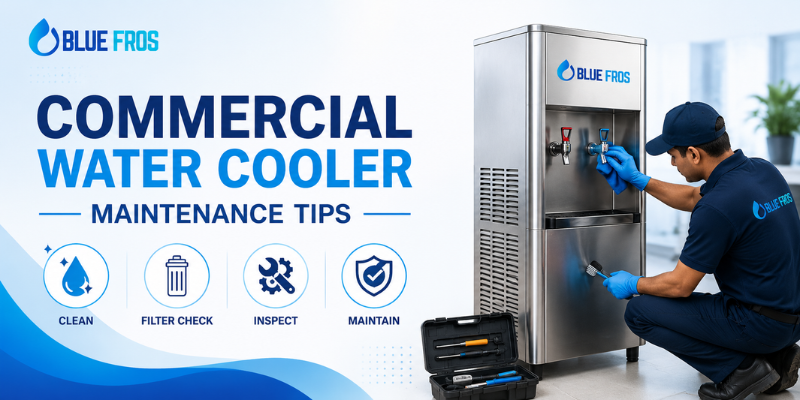
Commercial water coolers play a vital role in providing clean and chilled drinking water in offices, schools, hospitals, factories, shopping complexes, railway stations, airports, and other public facilities. These systems often operate continuously throughout the day, making regular maintenance essential for ensuring optimal performance, water quality, energy efficiency, and equipment longevity. Without proper maintenance, commercial water coolers can experience reduced cooling efficiency, increased energy consumption, water contamination issues, and costly repairs. A proactive maintenance routine not only helps extend the lifespan of the equipment but also ensures a safe and hygienic drinking water experience for users. This guide covers everything you need to know about commercial water cooler maintenance, including cleaning procedures, preventive maintenance practices, common problems, troubleshooting tips, and best practices for long-term performance. Why Commercial Water Cooler Maintenance Matters Many businesses focus on purchasing high-quality water cooling equipment but often overlook ongoing maintenance. Like any commercial appliance, water coolers require regular inspection and servicing to perform effectively. Proper maintenance helps: Maintain clean and safe drinking water Improve cooling performance Prevent unexpected breakdowns Reduce repair and replacement costs Increase equipment lifespan Enhance energy efficiency Minimize operational downtime Maintain hygiene compliance standards Regular maintenance is particularly important in high-traffic environments where hundreds of users may access the water cooler every day. Understanding How a Commercial Water Cooler Works Before discussing maintenance practices, it is helpful to understand the basic components of a commercial water cooler. A typical commercial water cooler consists of: Water storage tank Refrigeration system Compressor Condenser coils Evaporator Thermostat Water dispensing taps Filtration system (in some models) Drainage system Electrical control components All these components work together to cool, store, and dispense drinking water. If any component becomes dirty, damaged, or inefficient, overall performance can decline significantly. Benefits of Regular Commercial Water Cooler Maintenance Improved Water Quality Routine cleaning and sanitization help prevent the accumulation of dirt, bacteria, algae, and contaminants inside the water cooler system. Better Cooling Efficiency Clean coils, filters, and cooling components allow the unit to maintain consistent water temperatures while consuming less energy. Lower Operating Costs Preventive maintenance helps identify minor issues before they become expensive repairs. Increased Equipment Lifespan Commercial water coolers represent a significant investment. Proper maintenance helps maximize return on investment by extending equipment life. Reduced Downtime Scheduled maintenance minimizes unexpected failures and ensures uninterrupted access to drinking water. Essential Commercial Water Cooler Maintenance Tips 1. Clean Exterior Surfaces Frequently The exterior surface of a commercial water cooler is exposed to dust, fingerprints, spills, and environmental contaminants. Regular cleaning helps: Maintain a professional appearance Prevent dirt accumulation Reduce contamination risks Use a soft cloth and a non-abrasive cleaning solution for routine cleaning. 2. Sanitize Water Dispensing Areas Dispensing taps are among the most frequently touched parts of a water cooler. Regular sanitization helps prevent: Germ buildup Cross-contamination Bacterial growth Clean all dispensing nozzles and tap surfaces using approved sanitizing solutions. 3. Replace Water Filters as Recommended Many commercial water coolers incorporate filtration systems to improve water quality. Dirty or clogged filters may lead to: Reduced water flow Poor water taste Increased system strain Lower cooling efficiency Always follow the manufacturer’s recommended replacement schedule. 4. Inspect for Water Leaks Water leaks can cause: Water wastage Structural damage Mold growth Increased maintenance costs Inspect: Water supply lines Drainage connections Internal fittings Storage tanks Address leaks immediately to prevent further damage. 5. Keep Condenser Coils Clean Condenser coils release heat generated during the cooling process. When coils become covered with dust and debris: Cooling performance decreases Energy consumption increases Compressor workload rises Periodic coil cleaning helps maintain efficient operation. 6. Ensure Proper Ventilation Commercial water coolers require adequate airflow around the unit. Poor ventilation may result in: Overheating Reduced cooling efficiency Compressor failure Maintain sufficient clearance around all ventilation openings. 7. Monitor Water Temperature Regular temperature monitoring helps identify potential cooling issues before they become major problems. Consistent water temperatures indicate: Healthy compressor operation Proper thermostat function Efficient refrigeration performance Unexpected temperature fluctuations should be investigated promptly. 8. Inspect Electrical Components Electrical inspections should include: Power cables Electrical connections Switches Control panels Damaged wiring can create safety hazards and reduce equipment reliability. 9. Clean the Drain Tray Drain trays collect excess water during operation. If neglected, drain trays may become breeding grounds for: Bacteria Mold Foul odors Routine cleaning supports hygiene and sanitation standards. 10. Schedule Professional Preventive Maintenance Professional technicians can inspect internal components that are difficult to access during routine cleaning. Professional servicing may include: Refrigeration system inspection Compressor testing Thermostat calibration Leak detection Electrical safety checks Performance evaluation Annual servicing can significantly improve long-term reliability. Common Commercial Water Cooler Problems Water Not Cooling Properly Possible causes: Dirty condenser coils Faulty thermostat Compressor issues Poor ventilation Low Water Flow Possible causes: Clogged filters Blocked dispensing taps Internal scale buildup Water Leakage Possible causes: Loose fittings Damaged pipes Overflowing drain trays Unusual Noise Possible causes: Compressor wear Loose components Fan motor issues Unpleasant Taste or Odor Possible causes: Dirty water tank Old filters Inadequate sanitization Seasonal Maintenance Recommendations Summer Maintenance During high-demand periods: Monitor cooling performance more frequently Inspect ventilation areas Check compressor operation Winter Maintenance During colder months: Inspect electrical systems Verify thermostat performance Perform deep cleaning and sanitization Commercial Water Cooler Maintenance Checklist Daily Tasks Check overall operation Inspect dispensing taps Clean visible dirt and spills Weekly Tasks Clean external surfaces Sanitize dispensing areas Empty and clean drain trays Monthly Tasks Inspect filters Check water quality Verify cooling performance Quarterly Tasks Clean condenser coils Inspect electrical connections Check water supply lines Annual Tasks Schedule professional servicing Conduct comprehensive equipment inspection Replace worn components if necessary Best Practices for Long-Term Water Cooler Performance Use clean water sources Follow a maintenance schedule Replace filters regularly Train staff on proper usage Address minor issues promptly Maintain adequate ventilation Keep maintenance records Conduct periodic inspections Frequently Asked Questions (FAQS) How often should a commercial water cooler be cleaned? Most commercial water coolers should be cleaned and sanitized at least once every month, although

#WaterCoolerCleaning