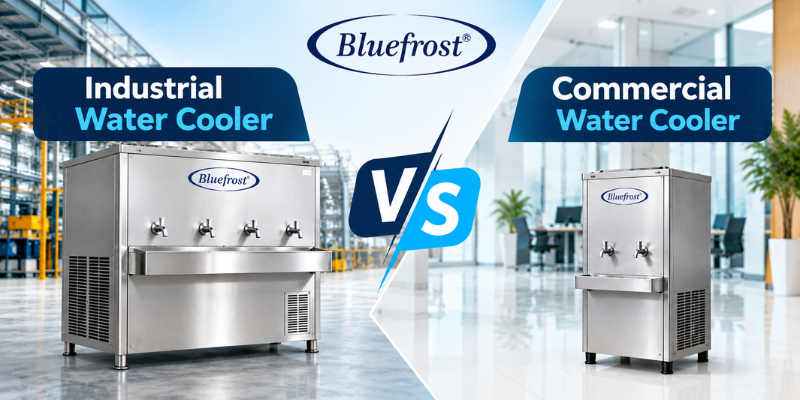
Industrial Water Cooler vs Commercial Water Cooler Choosing between an industrial water cooler and a commercial water cooler depends on the facility’s size, number of users, daily drinking-water demand, operating hours and installation requirements. While both provide chilled drinking water, their suitable applications and configurations can differ. This guide explains the key differences between industrial and commercial water coolers to help businesses select a suitable solution. What Is an Industrial Water Cooler? An industrial water cooler is designed for workplaces and facilities where drinking-water demand can be relatively high. It may be used in factories, manufacturing plants, warehouses, industrial campuses and large workforces. The suitable configuration depends on factors such as user volume, daily water consumption, cooling requirements and available installation space. What Is a Commercial Water Cooler? A commercial water cooler is generally used in offices, schools, hotels, restaurants, retail spaces and other commercial environments where regular chilled drinking water is required. The required model can be selected according to the number of users, expected water consumption, operating hours and available space. Industrial Water Cooler vs Commercial Water Cooler Feature Industrial Water Cooler Commercial Water Cooler Application Factories, manufacturing plants, warehouses & industrial facilities Offices, schools, hotels, restaurants & commercial spaces Usage Higher or regular workplace demand Regular commercial drinking-water demand Capacity Selected according to higher user and water requirements Selected according to commercial usage Cooling Suitable for demanding workplace environments Suitable for regular commercial use Configuration Based on facility and project requirements Based on site and user requirements Operating Hours Suitable for extended workplace operations Suitable for normal commercial operations Installation Planned according to site conditions Generally planned according to available space Maintenance Regular commercial/industrial maintenance Regular equipment maintenance Actual specifications and configurations vary according to the equipment model and application. Key Difference Between Industrial and Commercial Water Coolers The main difference is the application and expected usage requirement. Industrial water coolers are generally considered for facilities with larger workforces or higher drinking-water demand, while commercial water coolers are commonly used in offices and other commercial locations with regular user requirements. The right choice should be based on actual water consumption rather than simply selecting a cooler based on its category. How to Choose the Right Water Cooler? Before selecting a water cooler, consider: Number of users Expected daily water consumption Peak usage periods Operating hours Required cooling performance Storage requirement Available installation space Water source and installation conditions Maintenance access For factories and large industrial facilities, user volume and operating hours can be particularly important. For offices, schools, hotels and similar locations, regular daily consumption and available space may be the primary considerations. Industrial vs Commercial Water Cooler: Which One Should You Choose? Requirement More Suitable Option Large manufacturing facility Industrial Water Cooler Factory with multiple shifts Industrial Water Cooler Warehouse with larger workforce Industrial Water Cooler Corporate office Commercial Water Cooler School or college Commercial Water Cooler Hotel or hospitality facility Commercial Water Cooler Restaurant or food court Commercial Water Cooler Large industrial campus Industrial Water Cooler Facility with uncertain demand Select based on calculated water consumption These are general application guidelines. The final equipment should be selected according to the actual site and water requirements. Why Choose BlueFros? BlueFros provides drinking-water cooling equipment for industrial, commercial and institutional applications. Equipment selection can be based on user volume, daily water consumption, cooling requirements, storage capacity and installation conditions. Businesses can explore suitable solutions according to their specific application rather than using the same configuration for every facility. Frequently Asked Questions 1. What is the difference between an industrial water cooler and a commercial water cooler? An industrial water cooler is generally selected for facilities with higher user volumes or demanding workplace conditions, while commercial water coolers are commonly used in offices, schools, hotels, restaurants and other commercial locations. 2. Which water cooler is suitable for a factory? An industrial water cooler can be considered for factories based on the number of users, daily water consumption, operating hours and required cooling capacity. 3. Can commercial water coolers be used in offices? Yes. Commercial water coolers are commonly suitable for offices and other workplaces requiring regular access to chilled drinking water. 4. How do I choose the right water cooler capacity? Consider the number of users, expected daily water consumption, peak usage, operating hours and cooling requirements before selecting the appropriate configuration. 5. Are industrial water coolers suitable for warehouses? Yes. Suitable industrial water cooler configurations can be considered for warehouses with larger workforces and regular drinking-water requirements. 6. Does BlueFros supply industrial and commercial water coolers? BlueFros provides drinking-water cooling equipment for industrial, commercial and institutional applications, with selection based on facility requirements. An industrial water cooler is generally selected for facilities with higher user volumes or demanding workplace conditions, while commercial water coolers are commonly used in offices, schools, hotels, restaurants and other commercial locations. An industrial water cooler can be considered for factories based on the number of users, daily water consumption, operating hours and required cooling capacity. Yes. Commercial water coolers are commonly suitable for offices and other workplaces requiring regular access to chilled drinking water. Consider the number of users, expected daily water consumption, peak usage, operating hours and cooling requirements before selecting the appropriate configuration. Yes. Suitable industrial water cooler configurations can be considered for warehouses with larger workforces and regular drinking-water requirements. BlueFros provides drinking-water cooling equipment for industrial, commercial and institutional applications, with selection based on facility requirements. Choose the Right Water Cooler for Your Facility Not sure whether you need an industrial or commercial water cooler? Share your number of users, daily water requirement, application and installation requirements with BlueFros. Our team can help you identify a suitable water cooling solution based on your facility requirements. Call: +91 9355534074 | +91 7042104170Email: info@bluefros.com Contact Form Full NamePhone No.EmailYour MessageSubmit Form

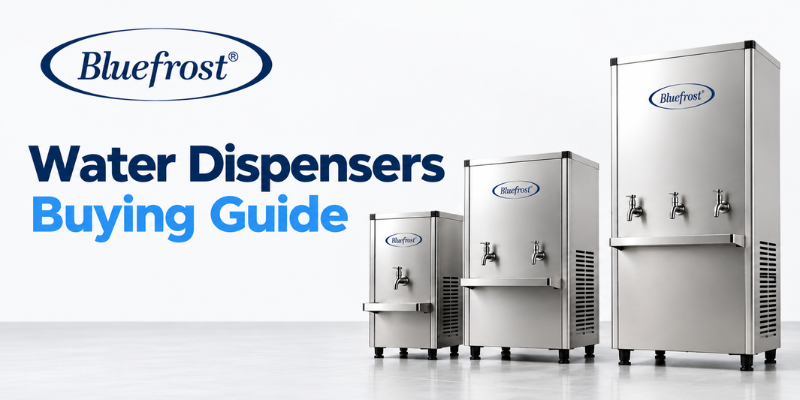
Water Dispensers Buying Guide
- admin
- October 3, 2026
- No Comments
Water Dispensers Buying Guide: Types, Features, Capacity & Selection Tips Choosing the right water dispenser depends on more than price or appearance. The suitable dispenser should match the number of users, daily water consumption, dispensing requirements, cooling needs, available space, and operating conditions. Different facilities have different drinking-water requirements. An office may need a different dispenser configuration from a factory, school, hospital, warehouse, or commercial facility. Therefore, comparing the specifications and intended application before purchasing can help identify a suitable water dispenser. This Water Dispensers Buying Guide explains the main types, important features, capacity considerations, and factors to evaluate before selecting a water dispenser. What Is a Water Dispenser? A water dispenser is equipment designed to provide drinking water through one or more dispensing points. Depending on the model, it may provide normal-temperature or chilled water.Water dispensers are available in different sizes, capacities, materials, and configurations. The appropriate option depends on the intended application, number of users, and expected water demand. Types of Water Dispensers Standard Water Dispenser Standard water dispensers are generally used where drinking-water requirements are moderate. They may be suitable for offices, small commercial spaces, and other locations with relatively lower user demand. Stainless Steel Water Dispenser Stainless steel water dispensers are commonly considered for commercial and institutional applications. Stainless steel can provide durability, corrosion resistance, and ease of cleaning. The specified material grade should be checked before purchasing. Industrial Water Dispenser Industrial water dispensers are intended for locations where regular or higher-volume drinking-water dispensing may be required. Factories, manufacturing facilities, warehouses, and large institutions may have different requirements depending on workforce size, shifts, and daily consumption. Water Dispenser Requirements by Application Different facilities have different usage patterns. The requirements may include: Office: Employee count, daily water consumption, and available space. Factory: Workforce, operating shifts, peak usage, and cooling requirements. School: Student count, peak usage, and number of dispensing points. Hospital: Staff, patients, visitors, and operating hours. Warehouse: Workforce, working hours, and installation space. Commercial Facility: User volume, daily water demand, and operating conditions. Actual requirements can vary depending on the facility’s usage pattern and operating conditions. What Should You Consider Before Buying a Water Dispenser? Before purchasing a water dispenser, evaluate the factors that can affect its suitability for your facility. Number of Users The number of users affects the expected drinking-water demand. Consider employees, workers, students, patients, visitors, and users across different shifts. Daily Water Consumption Estimate the approximate amount of drinking water required each day. This can help determine the suitable capacity and configuration. Cooling Requirement If chilled drinking water is required, check whether the dispenser provides cooling and whether its cooling capability is appropriate for the expected usage. Storage Capacity Storage capacity determines how much water is available for dispensing. It should be considered along with daily consumption and peak usage. Installation Space Measure the available installation area and consider sufficient access for cleaning, maintenance, connections, and drainage where applicable. Water Dispenser Buying Factors When comparing different models, consider the following factors: Buying Factor What to Consider Number of Users Expected number of people using the dispenser Daily Water Requirement Approximate drinking-water consumption Cooling Requirement Whether normal or chilled water is required Storage Capacity Amount of water available for dispensing Construction Material Durability, cleaning, and specified material grade Installation Space Available space and maintenance access Operating Hours Regular hours, extended hours, or multiple shifts Maintenance Cleaning, inspection, and servicing requirements Comparing these factors can help you select a dispenser according to your facility’s actual requirements rather than choosing only on price or appearance. How Much Water Dispenser Capacity Do You Need? The required capacity depends on the number of users, daily water consumption, peak demand, operating hours, and dispensing requirements. For example, a small office may have lower water requirements than a factory operating across multiple shifts. Schools, hospitals, warehouses, and commercial facilities may also experience different patterns of water consumption. Therefore, capacity should be considered together with the overall usage pattern instead of being evaluated separately. Water Dispenser vs Water Cooler Factor Water Dispenser Water Cooler Primary Purpose Dispenses drinking water Provides and dispenses chilled drinking water Cooling System May or may not have cooling Generally includes a cooling system Water Temperature Normal or chilled, depending on model Primarily chilled water Application Offices, homes, and commercial facilities Offices, factories, schools, hospitals, and commercial facilities Configuration Varies by model Varies according to cooling and usage requirements Selection Based on dispensing requirements Based on cooling capacity, water demand, and user requirements How to Maintain a Water Dispenser? Regular maintenance can help keep a water dispenser suitable for continued use. Maintenance requirements vary according to the equipment design and manufacturer instructions. Common considerations include: Cleaning accessible components regularly Checking dispensing points Maintaining drainage where applicable Inspecting connections and fittings Following the recommended maintenance schedule Addressing unusual operation or performance issues Always follow the maintenance instructions provided for the specific equipment. How to Choose the Right Water Dispenser? Before making a purchase, consider: Number of users Daily drinking-water consumption Peak usage Cooling requirement Storage capacity Construction material Installation space Operating hours Maintenance access Intended application Evaluating these factors together can help you select a water dispenser that is appropriate for your facility’s actual drinking-water requirements. Frequently Asked Questions What is a water dispenser? A water dispenser is equipment designed to provide drinking water through one or more dispensing points. Depending on the model, it may provide normal-temperature or chilled water. How do I choose the right water dispenser? Consider the number of users, daily water consumption, cooling requirements, storage capacity, installation space, operating hours, maintenance, and intended application. What type of water dispenser is suitable for a factory? A factory may require a dispenser based on its workforce, operating shifts, daily water consumption, peak usage, and installation conditions. The appropriate configuration depends on the facility’s actual requirements. Is stainless steel suitable for a water dispenser? Stainless steel is commonly used in commercial and industrial water dispensing equipment because of its durability, corrosion resistance, and ease
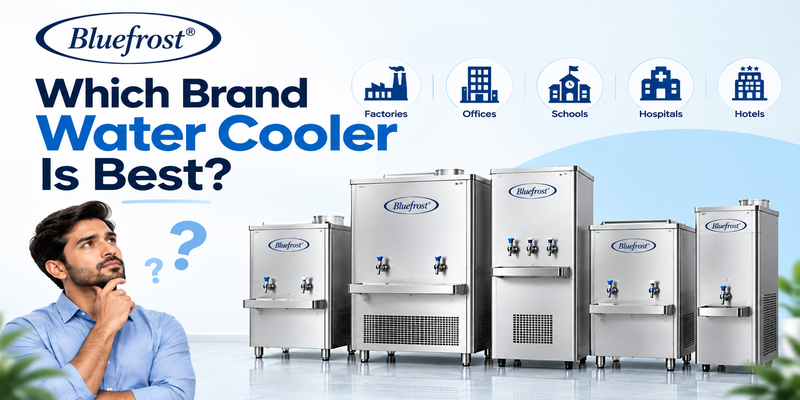
Which Brand Water Cooler Is Best
- admin
- October 1, 2026
- No Comments
Which Brand Water Cooler Is Best? Choosing the best water cooler is not simply about selecting a popular brand. Different water coolers are designed for different usage requirements, and the suitable option depends on factors such as number of users, daily water consumption, cooling capacity, storage capacity, construction material, operating hours, and installation conditions. A water cooler required for a small office may have different specifications from one used in a factory, school, hospital, warehouse, or large commercial facility. Therefore, comparing the specifications and intended application of different models is a practical way to identify a suitable water cooler. BlueFros provides water cooling solutions for commercial, industrial, and institutional applications, making these factors relevant when evaluating suitable water cooling equipment. What Makes a Good Water Cooler? A suitable water cooler should match the facility’s users, water demand, cooling requirements, and installation conditions. Important factors include cooling capacity, storage capacity, number of users, construction material, dispensing requirements, and maintenance. These factors can vary between models, so specifications should be compared before choosing a water cooler. Cooling Capacity Cooling capacity should match the expected water consumption and number of users. A small office may have different requirements from a factory with multiple shifts. Storage Capacity Storage capacity determines how much chilled water is available for dispensing. It should be considered along with cooling capacity, daily consumption, and peak usage. Construction Material Construction material is important for regular commercial and industrial use. Stainless steel is commonly used because of its durability, corrosion resistance, and ease of cleaning. Always check the specified material grade. Number of Users The number of users affects the required cooling and storage capacity. Consider employees, workers, students, patients, visitors, and users across different shifts. Water Cooler Requirements by Application Different facilities can have different drinking-water requirements. Application Important Factors Office Employee count, daily consumption, space Factory Workforce, shifts, cooling and storage School Student count, peak usage, dispensing Hospital Staff, patients, visitors, operating hours Warehouse Workforce, working hours, installation space Hotel Staff and visitor usage, capacity Commercial Facility User volume, peak demand, operating conditions This table provides a general comparison. Actual requirements depend on the facility’s usage pattern and operating .conditions. Industrial or Commercial Water Cooler vs Standard Water Cooler Industrial and commercial water coolers are generally considered for locations with regular or higher usage, while standard water coolers are commonly used in smaller or lower-demand environments. Factor Industrial/Commercial Water Cooler Standard Water Cooler Usage Regular or higher usage Light to moderate usage Users Larger user groups Smaller user groups Capacity Multiple configurations may be available Usually standard Construction Stainless steel options may be available Varies by model Application Factories, offices, institutions Homes and smaller locations Configuration Based on application Generally standard Installation May require planned site conditions Usually simpler Actual specifications differ by manufacturer and model, so the product documentation should always be checked before purchasing. What Should You Compare Between Water Cooler Brands? When comparing different water cooler brands, look beyond the brand name and review the product specifications, application suitability, warranty terms, service support, installation requirements, and maintenance conditions. It is also useful to check whether the manufacturer provides clear product specifications and support for the intended type of facility. Comparing these details can help you understand the differences between available models and select an option that matches your operational requirements. How to Choose the Right Water Cooler? Before selecting a water cooler, consider the following: Number of users Daily drinking-water consumption Peak usage Required cooling capacity Storage requirement Number of dispensing points Available installation space Operating hours Maintenance access Type of facility For example, a small office may have lower water requirements than a factory operating across multiple shifts. Similarly, a school or hospital may experience higher water demand during specific periods of the day. Selecting the equipment according to actual usage requirements can help ensure that the water cooling solution is suitable for the facility. Frequently Asked Questions Which brand water cooler is best? There is no single water cooler brand or model that is suitable for every application. The right choice depends on the number of users, cooling capacity, storage capacity, construction material, application, water consumption, and installation requirements. What is the most important factor when choosing a water cooler? There is no single factor that applies to every facility. Cooling capacity, storage capacity, number of users, daily water consumption, material, operating hours, and installation conditions should be considered together. Which water cooler is suitable for a factory? A factory water cooler should be selected according to the number of workers, daily drinking-water consumption, operating shifts, cooling requirements, storage capacity, dispensing points, and available installation space. Are stainless steel water coolers suitable for commercial use? Stainless steel water coolers can be considered for commercial and industrial applications where durability, corrosion resistance, regular usage, and ease of cleaning are important considerations. The specific material grade should be checked in the product specifications. How do I choose the right water cooler capacity? Start by estimating the number of users and daily drinking-water consumption. Then consider peak usage, operating hours, cooling capacity, storage requirements, and installation conditions before selecting a suitable model. There is no single water cooler brand or model that is suitable for every application. The right choice depends on the number of users, cooling capacity, storage capacity, construction material, application, water consumption, and installation requirements. There is no single factor that applies to every facility. Cooling capacity, storage capacity, number of users, daily water consumption, material, operating hours, and installation conditions should be considered together. A factory water cooler should be selected according to the number of workers, daily drinking-water consumption, operating shifts, cooling requirements, storage capacity, dispensing points, and available installation space. Stainless steel water coolers can be considered for commercial and industrial applications where durability, corrosion resistance, regular usage, and ease of cleaning are important considerations. The specific material grade should be checked in the product specifications. Start by estimating the number of users and daily drinking-water consumption. Then consider peak
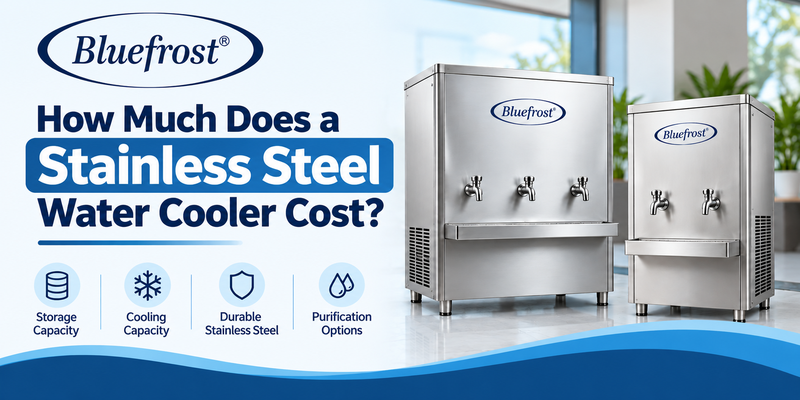
How Much Does a Stainless Steel Water Cooler Cost
- admin
- September 30, 2026
- No Comments
How Much Does a Stainless Steel Water Cooler Cost? The cost of a stainless steel water cooler depends on several factors, including storage capacity, cooling capacity, stainless steel specification, number of taps, purification requirements, installation conditions, and application. Commercial and industrial water coolers can have different configurations depending on the number of users and daily drinking-water demand. There is no single cost applicable to every stainless steel water cooler. A model suitable for a small office may have different requirements from one used in a factory, school, hospital, warehouse, or large institution. What Affects the Cost of a Stainless Steel Water Cooler? 1. Storage Capacity Storage capacity determines how much water the cooler can hold. Facilities with more users may require a larger-capacity system. 2. Cooling Capacity Cooling capacity determines the refrigeration performance required to provide chilled drinking water during regular usage. Higher-demand facilities may require a suitable commercial or industrial cooling configuration. 3. Stainless Steel Specification The type and specification of stainless steel used in the construction and water-contact areas can influence the equipment configuration. Buyers should check the manufacturer’s stated material specifications. 4. Number of Taps The number of dispensing taps affects how many users can access drinking water at the same time. Multiple taps can be useful for factories, institutions, schools, and other high-use locations. 5. Purification Requirements Some water coolers are designed only for cooling, while other configurations can include RO, UV, or filtration systems depending on the source-water quality and application. 6. Installation Requirements Available space, plumbing, electrical connections, drainage, and site conditions can affect the installation requirements. 7. Customization Commercial and industrial applications may require specific dimensions, additional taps, or application-specific configurations, which can affect the overall setup. Factors to Consider Before Choosing Factor Why It Matters Storage Capacity Determines the amount of water available for regular usage. Cooling Capacity Helps match cooling performance with expected water demand. Stainless Steel Specification Determines the construction and application suitability. Number of Taps Supports dispensing for multiple users. Purification System RO, UV, or filtration may be required depending on water quality. Application Requirements vary between offices, factories, schools, hospitals, and institutions. Installation Space, plumbing, electrical and site conditions need to be considered. Customization Special requirements may need an application-specific configuration. Stainless Steel Water Cooler for Commercial and Industrial Use Stainless steel water coolers can be used in factories, offices, schools, hospitals, warehouses, hotels, institutions, and other commercial facilities. The suitable configuration depends on the number of users, daily water consumption, operating hours, peak demand, cooling requirements, and available installation space. For industrial applications, buyers should consider peak drinking-water demand rather than only average daily consumption. How to Choose the Right Stainless Steel Water Cooler? Before selecting a model, determine: Number of users Daily water consumption Peak usage Required cooling performance Storage requirements Number of dispensing points Water source and quality Purification requirements Available installation space Maintenance requirements A small office and a factory operating multiple shifts may require completely different configurations. Stainless Steel Water Cooler Selection by Application Application Key Requirements Suitable Considerations Offices Regular employee usage Capacity, cooling and dispensing Factories Higher user volume Cooling capacity, storage and multiple taps Schools & Colleges Peak usage during breaks User volume, dispensing points and cooling Hospitals Staff, patient and visitor usage Hygiene, water quality and cooling Warehouses Employee drinking-water access Capacity and installation space Institutions Regular or scheduled usage User volume, cooling and maintenance Hotels & Commercial Facilities Staff and guest requirements Capacity and dispensing configuration Frequently Asked Questions How much does a stainless steel water cooler cost? The cost varies according to capacity, cooling performance, stainless steel specification, number of taps, purification requirements, installation, and customization. A fixed cost does not apply to every model. What factors affect stainless steel water cooler cost? Storage capacity, cooling capacity, material specification, dispensing configuration, purification requirements, installation conditions, and customization can all influence the overall cost. Is a stainless steel water cooler suitable for factories? Yes. Suitable commercial and industrial models can be used in factories based on employee count, shift timings, water consumption, cooling requirements, and dispensing needs. Does every stainless steel water cooler include RO or UV? No. RO, UV, and filtration depend on the specific model or configuration. Cooling and water purification requirements should be assessed separately. How do I choose the right water cooler capacity? Consider the number of users, daily water consumption, peak usage, operating hours, storage requirements, and cooling demand before selecting a capacity. Can stainless steel water coolers be customized? Depending on the manufacturer and application, configurations may be available for different capacities, dispensing points, installation conditions, and other requirements. The cost varies according to capacity, cooling performance, stainless steel specification, number of taps, purification requirements, installation, and customization. A fixed cost does not apply to every model. Storage capacity, cooling capacity, material specification, dispensing configuration, purification requirements, installation conditions, and customization can all influence the overall cost. Yes. Suitable commercial and industrial models can be used in factories based on employee count, shift timings, water consumption, cooling requirements, and dispensing needs. No. RO, UV, and filtration depend on the specific model or configuration. Cooling and water purification requirements should be assessed separately. Consider the number of users, daily water consumption, peak usage, operating hours, storage requirements, and cooling demand before selecting a capacity. Depending on the manufacturer and application, configurations may be available for different capacities, dispensing points, installation conditions, and other requirements. Get the Right Stainless Steel Water Cooler for Your Facility Looking for a stainless steel water cooler for your office, factory, hospital, school, or commercial facility? Share your number of users, daily water requirement, cooling needs, and installation requirements with BlueFros to identify a suitable water cooling solution. Call Us: +91 9355534074 | +91 7042104170Email: info@bluefros.com Contact Form Full NamePhone No.EmailYour MessageSubmit Form
What Is the Best Water Cooler Machine for Industrial Use
- admin
- September 25, 2026
- No Comments
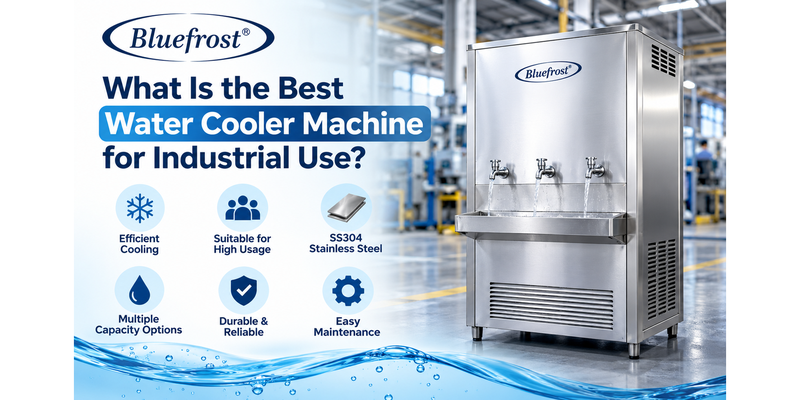
What Is the Best Water Cooler Machine for Industrial Use? The best water cooler machine for industrial use depends on the number of users, daily water demand, cooling capacity, storage requirement, operating hours, and installation conditions. Factories, manufacturing plants, warehouses, hospitals, schools, offices, and other large facilities may have different drinking-water requirements. Therefore, the right industrial water cooler should be selected according to the facility’s actual usage, water demand, and operating conditions rather than simply choosing the largest machine. What Is an Industrial Water Cooler Machine? An industrial water cooler is a drinking-water cooling system designed for workplaces and facilities where regular or high-volume access to chilled drinking water is required. Unlike small household water dispensers, industrial water coolers can be available in different cooling and storage capacities and configurations. The appropriate model depends on factors such as user volume, daily water consumption, cooling requirements, operating conditions, and installation space. These machines can be used in: Manufacturing plants Factories Warehouses Engineering units Corporate offices Hospitals Schools and colleges Hotels Restaurants Commercial buildings Large institutional facilities What Makes a Water Cooler Suitable for Industrial Use? The right industrial water cooler depends on the facility’s users, water demand, cooling capacity, storage, operating hours, and installation space. 1. Cooling Capacity Choose capacity according to peak water demand. BlueFros offers 20 LPH, 40 LPH, 60 LPH, 80 LPH, and 150 LPH configurations. 2. Number of Users Factories, warehouses, hospitals, and large institutions may require different capacities depending on their workforce and usage. 3. Storage Capacity Storage should be considered along with cooling capacity, daily consumption, and peak demand. 4. Construction Material SS304 stainless steel is commonly used for industrial water coolers due to durability, corrosion resistance, and ease of cleaning. 5. Operating Hours Multi-shift factories may require equipment designed around higher and more regular water demand. 6. Installation Space Check machine dimensions, water and electrical connections, drainage, ventilation, accessibility, and maintenance space before installation. Which Water Cooler Is Suitable for Different Industrial Requirements? The right water cooler depends on facility size, number of users, water demand, and installation requirements. Facility Suitable Solution Small industrial unit Standard industrial water cooler Medium workplace Higher-capacity water cooler Large factory High-capacity industrial water cooler Multiple drinking points Centralized water cooling system Special requirements Customized cooling solution Actual capacity should be selected according to users, daily water consumption, cooling requirements, and available installation space. Industrial Water Cooler vs Standard Water Cooler Factor Industrial Water Cooler Standard Water Cooler Usage Regular or high usage Light to moderate usage Users Large user groups Smaller user groups Capacity Multiple capacity options Usually lower capacity Application Factories, institutions, workplaces Homes and small offices Configuration Industrial and customized options Standard configurations How Do You Choose the Right Industrial Water Cooler Capacity? Choose the capacity based on number of users, daily water consumption, peak demand, and operating shifts. Also consider installation space and future expansion to select a suitable cooling solution for your facility. When Should You Consider a Centralized Water Cooling System? A centralized water cooling system can be suitable for large factories, industrial campuses, institutions, and facilities with multiple drinking-water points. The choice depends on facility layout, users, and water demand. Why Is SS304 Used in Industrial Water Coolers? SS304 stainless steel is commonly used in industrial water coolers because of its durability, corrosion resistance, hygienic properties, and easy cleaning. It is a practical material for drinking-water equipment used in factories, offices, hospitals, and other high-usage facilitie Where Are Industrial Water Coolers Used? Industrial water coolers are suitable for factories, manufacturing plants, warehouses, hospitals, schools, offices, hotels, and other commercial or institutional facilities where regular access to chilled drinking water is required. What Should You Check Before Buying? Before purchasing, check cooling capacity, storage capacity, number of users, power requirements, machine dimensions, construction material, installation needs, maintenance, warranty, and service support. This helps ensure the cooler matches your facility’s actual requirements. Frequently Asked Questions (FAQs) 1. What is the best water cooler machine for industrial use? The right industrial water cooler depends on the number of users, daily water consumption, cooling capacity, storage requirement, operating hours, and installation space. 2. How do I choose the right industrial water cooler capacity? Choose the capacity based on number of users, daily water demand, peak usage, and operating shifts. Installation space and future expansion should also be considered. 3. Is SS304 stainless steel suitable for industrial water coolers? Yes. SS304 stainless steel is commonly used because of its durability, corrosion resistance, hygienic properties, and easy cleaning. 4. Where are industrial water coolers used? Industrial water coolers are used in factories, manufacturing plants, warehouses, hospitals, schools, offices, hotels, and other commercial or institutional facilities. 5. When should I consider a centralized water cooling system? A centralized water cooling system can be considered for large factories, industrial campuses, institutions, and facilities with multiple drinking-water points. 6. What should I check before buying an industrial water cooler? Check cooling capacity, storage capacity, number of users, power requirements, dimensions, construction material, installation requirements, maintenance, warranty, and service support before purchasing. The right industrial water cooler depends on the number of users, daily water consumption, cooling capacity, storage requirement, operating hours, and installation space. Choose the capacity based on number of users, daily water demand, peak usage, and operating shifts. Installation space and future expansion should also be considered. Yes. SS304 stainless steel is commonly used because of its durability, corrosion resistance, hygienic properties, and easy cleaning. Industrial water coolers are used in factories, manufacturing plants, warehouses, hospitals, schools, offices, hotels, and other commercial or institutional facilities. A centralized water cooling system can be considered for large factories, industrial campuses, institutions, and facilities with multiple drinking-water points. Check cooling capacity, storage capacity, number of users, power requirements, dimensions, construction material, installation requirements, maintenance, warranty, and service support before purchasing. Need the Right Industrial Water Cooler? Looking for a suitable industrial water cooler machine? Share your requirements with BlueFros and discuss the right cooling solution for your facility. Contact Form Full
How to Choose the Right Industrial Water Cooler: A Complete Buying Guide
- admin
- July 22, 2026
- No Comments
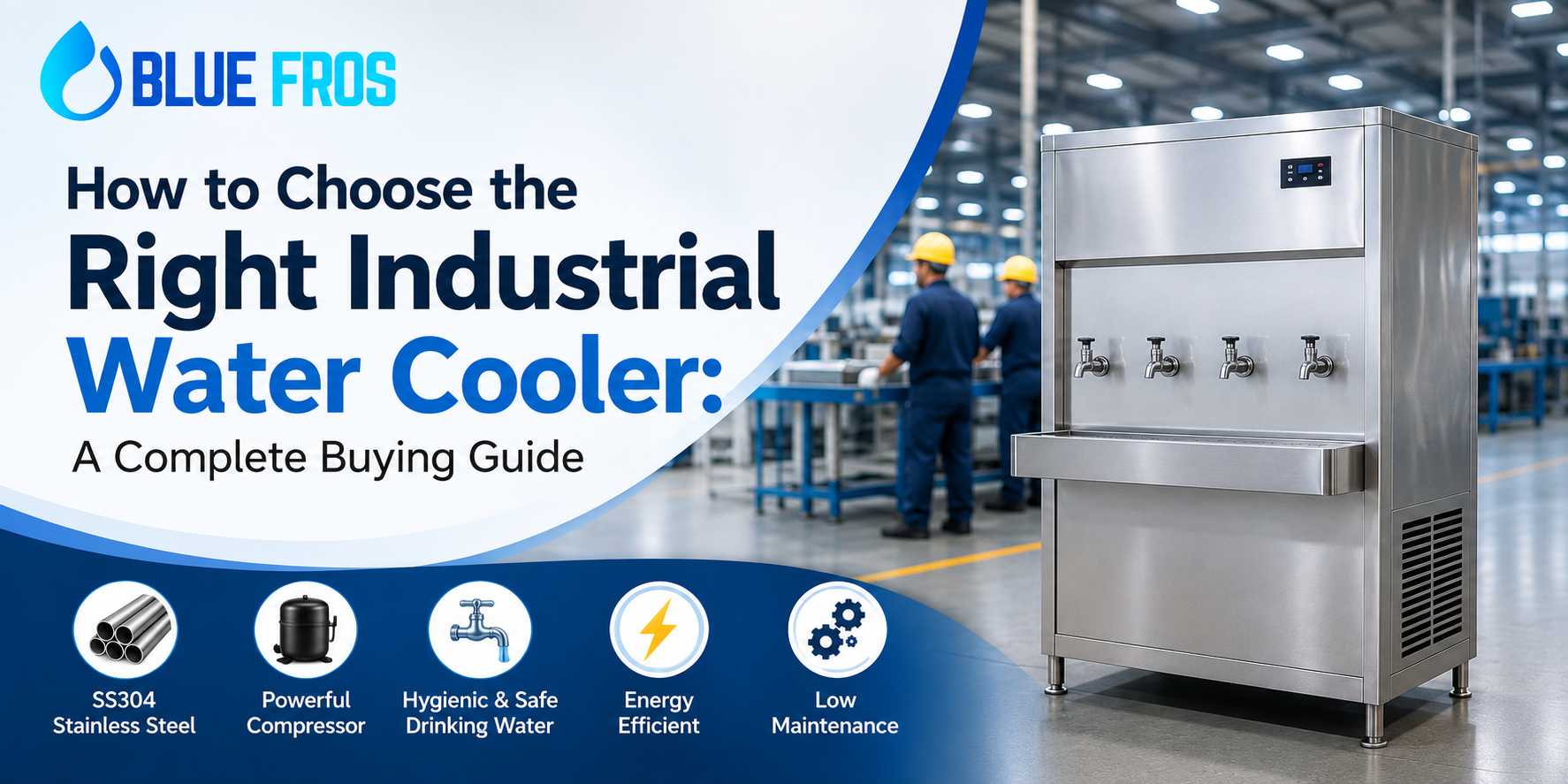
How to Choose the Right Industrial Water Cooler: A Complete Buying Guide Choosing the right Industrial Water Cooler is essential for ensuring a continuous supply of hygienic chilled drinking water in factories, warehouses, offices, schools, hospitals, hotels, and other commercial facilities. A well-designed industrial water cooler not only provides safe and refreshing drinking water but also enhances employee comfort, supports workplace productivity, and minimizes downtime caused by inadequate water availability. Selecting the right industrial water cooler is more than simply choosing a model based on price or storage capacity. Businesses should evaluate several important factors, including workforce size, cooling capacity, storage capacity, food-grade SS304 stainless steel construction, energy efficiency, installation space, maintenance requirements, and future expansion plans. Choosing the right system helps reduce long-term operating costs while delivering reliable performance for years. Whether you are installing a new water cooling system or replacing an existing one, understanding these key buying factors will help you invest in the most suitable solution for your business. This guide explains everything you need to know before purchasing an industrial water cooler. Key Factors to Consider Before Buying Buying Factor Why It Matters Cooling Capacity Ensures a continuous supply of chilled water during peak usage hours. Storage Capacity Stores enough chilled water for uninterrupted availability. SS304 Stainless Steel Provides superior hygiene, corrosion resistance, and long-lasting durability. Energy Efficiency Reduces electricity consumption and operating costs. Compressor Quality Delivers faster cooling with consistent performance. Installation & Service Support Simplifies maintenance and ensures reliable long-term operation. Why Choosing the Right Industrial Water Cooler Matters An industrial water cooler is a long-term investment that directly impacts employee well-being and operational efficiency. Selecting an undersized model may lead to water shortages during peak hours, while choosing an oversized unit can increase electricity consumption and unnecessary operating expenses. The right industrial water cooler provides a reliable supply of chilled drinking water, supports employee hydration, improves workplace productivity, and reduces maintenance costs. Modern industrial water coolers are also designed to offer better energy efficiency, hygienic water storage, and durable construction. Businesses that invest in high-quality equipment benefit from lower lifecycle costs, fewer maintenance issues, and dependable performance even in demanding industrial environments. Factors to Consider Before Buying an Industrial Water Cooler Choosing the right industrial water cooler requires careful planning to ensure it meets your current and future drinking water requirements. Before making a purchase, businesses should evaluate the following factors. 1. Evaluate the Number of Users The first step is to estimate how many people will use the water cooler daily. A factory with 40 employees has different requirements than a manufacturing plant with over 300 workers. Selecting a model based on workforce size ensures a continuous supply of chilled drinking water without interruptions during peak hours. 2. Calculate Daily Water Consumption Daily water demand depends on the number of users, weather conditions, working hours, and shift operations. Facilities with multiple shifts or outdoor work environments generally require higher-capacity industrial water coolers. Calculating average daily consumption helps businesses choose the right cooling and storage capacity. 3. Select the Right Cooling Capacity Cooling capacity is measured in Litres Per Hour (LPH) and determines how much chilled water the system can produce every hour. Choosing the correct LPH rating prevents water shortages while avoiding unnecessary electricity consumption. Businesses should always consider future workforce growth when selecting cooling capacity. Recommended Cooling Capacity Number of Users Recommended Cooling Capacity 20–40 Users 20–40 LPH 40–80 Users 40–60 LPH 80–150 Users 60–80 LPH 150–300 Users 80–150 LPH Above 300 Users 150 LPH & Above 4. Choose the Right Storage Capacity Storage capacity determines how much chilled water is available instantly. Factories and commercial facilities often experience high water demand during lunch breaks, shift changes, and peak working hours. Selecting an adequate storage tank ensures uninterrupted water availability even during periods of heavy usage. 5. Prefer Food-Grade SS304 Stainless Steel Material quality plays a vital role in maintaining hygiene and durability. Food-grade SS304 stainless steel offers excellent corrosion resistance, prevents contamination, and is easy to clean. Compared to lower-grade materials, SS304 provides longer service life and is widely preferred for industrial and commercial drinking water applications. 6. Check Energy Efficiency Industrial water coolers operate continuously in many facilities, making energy efficiency an important consideration. Look for models equipped with high-efficiency compressors, quality insulation, and advanced refrigeration technology. Energy-efficient systems reduce electricity bills while delivering reliable cooling performance throughout the year. 7. Consider Installation Space Before purchasing, evaluate the available installation area, ventilation requirements, water supply connection, drainage facilities, and maintenance access. Proper installation improves cooling efficiency, simplifies servicing, and extends the overall lifespan of the equipment. 8. Evaluate Maintenance Requirements Routine maintenance helps ensure hygienic drinking water and consistent cooling performance. Choose industrial water coolers with easily accessible components, durable refrigeration systems, and simple cleaning procedures. Equipment that requires minimal maintenance reduces downtime and operating costs. 9. Choose a Trusted Manufacturer A reliable manufacturer provides more than just quality equipment. Look for companies that offer food-grade SS304 construction, multiple capacity options, product warranty, genuine spare parts, technical support, and dependable after-sales service. Partnering with an experienced manufacturer ensures long-term reliability and peace of mind for your business. Common Mistakes to Avoid When Buying an Industrial Water Cooler Many businesses choose an industrial water cooler based only on price, which can lead to higher operating costs and poor performance over time. Avoiding these common mistakes will help you make a better long-term investment. Choosing insufficient cooling capacity for the number of users. Ignoring future workforce growth and increasing water demand. Selecting non-food-grade stainless steel instead of hygienic SS304. Purchasing low-quality compressors that increase maintenance costs. Overlooking energy efficiency and long-term electricity consumption. Ignoring warranty, spare parts availability, and after-sales service. Taking time to evaluate these factors before purchasing ensures reliable performance, improved employee satisfaction, and lower maintenance costs throughout the product’s lifespan. Industrial Water Cooler Buying Checklist Before making your final purchase decision, verify the following requirements: Checklist Status Workforce Size Evaluated ✔ Daily Water Demand Calculated ✔
water cooler buying guide
- admin
- June 29, 2026
- No Comments
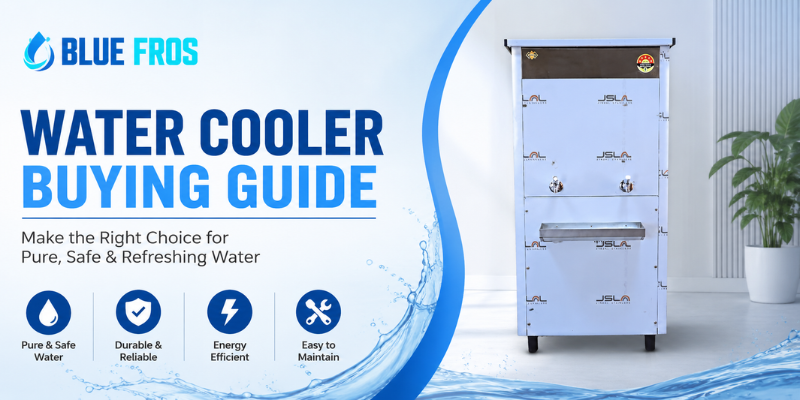
Finding the right water cooler is essential for maintaining a healthy and productive environment. Whether you need a water cooler for an office, school, hospital, factory, or commercial space, choosing the right model ensures a continuous supply of clean, chilled drinking water while reducing maintenance costs and energy consumption. In this comprehensive Water Cooler Buying Guide, we’ll explain everything you need to know before purchasing a commercial water cooler. Why Investing in the Right Water Cooler Matters A water cooler is more than just a drinking water dispenser. It helps improve employee productivity, encourages proper hydration, and provides safe drinking water for visitors and staff. Choosing the wrong model may result in: Insufficient cooling capacity Higher electricity bills Frequent maintenance Poor water hygiene Shorter equipment lifespan Selecting the right water cooler eliminates these problems and provides long-term value. Different Types of Water Coolers Choosing the correct type depends on your application and daily water consumption. Water Cooler Type Best For Main Benefits Stainless Steel Water Cooler Schools, Hospitals, Factories Durable, rust-resistant, hygienic Storage Water Cooler High-traffic areas Large storage capacity Bottled Water Cooler Offices Easy installation Direct Water Line Cooler Corporate buildings Continuous water supply Industrial Water Cooler Manufacturing plants Heavy-duty performance Factors to Consider Before Buying a Water Cooler 1. Daily Water Consumption The first thing to consider is how many people will use the water cooler daily. Number of Users Recommended Capacity 10–20 People 20–40 Litres 20–50 People 40–80 Litres 50–100 People 80–150 Litres 100+ People 150 Litres and Above Buying the correct capacity ensures a steady supply of chilled drinking water throughout the day. 2. Cooling Capacity Storage capacity and cooling capacity are different. For example: Storage Capacity = Water stored inside the tank Cooling Capacity = Litres cooled per hour Always check both specifications before purchasing. 3. Stainless Steel Construction For commercial use, stainless steel is always recommended because it offers: Rust resistance Better hygiene Long service life Easy cleaning Corrosion protection Food-grade stainless steel is ideal for ensuring safe drinking water. 4. Energy Efficiency An energy-efficient water cooler reduces electricity costs without compromising cooling performance. Look for: High-efficiency compressors Quality insulation Fast cooling technology Low power consumption 5. Installation Location Your installation area plays an important role in selecting the right model. Suitable locations include: Offices Schools Colleges Hospitals Factories Shopping malls Hotels Restaurants Public buildings Indoor and outdoor installations may require different models. 6. Water Quality If your incoming water contains impurities, consider installing a water purifier alongside the water cooler. Clean water protects both users and the equipment. 7. Maintenance Requirements Choose a model that offers: Easy servicing Replaceable components Accessible drainage Easy cleaning Lower maintenance means lower operating costs. Key Features to Look For A quality commercial water cooler should include: Food-grade stainless steel body Heavy-duty compressor Fast cooling technology Rust-resistant construction Durable faucets Large cooling tank Low power consumption Easy maintenance Reliable performance Long operational life Common Mistakes to Avoid Many buyers make these common mistakes: Buying based only on price Ignoring cooling capacity Choosing insufficient storage Purchasing low-quality materials Not considering future usage Skipping warranty details Ignoring after-sales support Avoiding these mistakes saves money over time. Benefits of Commercial Water Coolers Commercial water coolers provide several advantages. Continuous supply of chilled water Improved workplace productivity Better employee hydration Hygienic drinking water Cost-effective operation Long service life Durable construction Reduced plastic bottle usage Environmentally friendly solution How to Select the Right Water Cooler Follow these simple steps: Calculate daily water consumption. Choose the required storage capacity. Check cooling capacity. Select food-grade stainless steel construction. Compare energy efficiency. Verify warranty and service support. Buy from a trusted manufacturer. Why Choose Blue Fros Water Coolers? Blue Fros offers high-quality commercial water coolers designed for performance, durability, and hygiene. Whether you need a water cooler for a small office or a large industrial facility, Blue Fros provides reliable solutions built to meet modern commercial requirements. Blue Fros water coolers are known for: Premium stainless steel construction High cooling efficiency Energy-saving operation Low maintenance design Long-lasting durability Suitable models for offices, schools, hospitals, factories, and public spaces With a focus on quality and customer satisfaction, Blue Fros helps businesses provide safe and refreshing drinking water every day Water Cooler Comparison Feature Standard Water Cooler Blue Fros Water Cooler Stainless Steel Body Sometimes ✔ Premium Grade Fast Cooling Basic ✔ High Performance Energy Efficient Average ✔ Optimized Commercial Use Limited ✔ Yes Easy Maintenance Moderate ✔ Easy Long Service Life Standard ✔ Extended Durability Frequently Asked Questions Which water cooler is best for offices? A stainless steel water cooler with adequate storage and cooling capacity is ideal for office environments. How do I choose the right capacity? Estimate the number of daily users and select a model that matches both storage and cooling requirements. Is a stainless steel water cooler better than plastic? Yes. Stainless steel is more durable, hygienic, corrosion-resistant, and suitable for commercial applications. How often should a water cooler be cleaned? Regular cleaning every 2–3 months, along with routine maintenance, helps ensure hygienic operation and extends the equipment’s lifespan. A stainless steel water cooler with adequate storage and cooling capacity is ideal for office environments. Estimate the number of daily users and select a model that matches both storage and cooling requirements. Yes. Stainless steel is more durable, hygienic, corrosion-resistant, and suitable for commercial applications. Regular cleaning every 2–3 months, along with routine maintenance, helps ensure hygienic operation and extends the equipment’s lifespan. Ready to Choose the Right Water Cooler? Explore Blue Fros‘ range of premium commercial water coolers and find the perfect solution for your workplace or facility. Whether you need a compact office model or a high-capacity industrial unit, Blue Fros delivers dependable performance, superior quality, and long-lasting value. Contact our team today to get expert guidance and choose the ideal water cooler for your needs.
commercial Water Cooler Maintenance Tips
- admin
- June 24, 2026
- No Comments
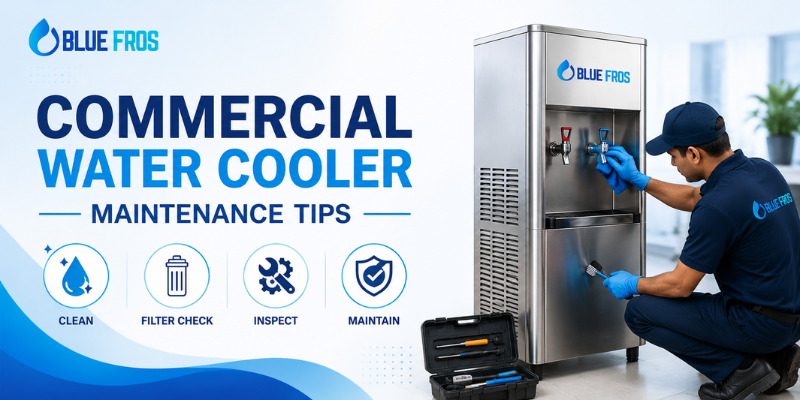
Commercial water coolers play a vital role in providing clean and chilled drinking water in offices, schools, hospitals, factories, shopping complexes, railway stations, airports, and other public facilities. These systems often operate continuously throughout the day, making regular maintenance essential for ensuring optimal performance, water quality, energy efficiency, and equipment longevity. Without proper maintenance, commercial water coolers can experience reduced cooling efficiency, increased energy consumption, water contamination issues, and costly repairs. A proactive maintenance routine not only helps extend the lifespan of the equipment but also ensures a safe and hygienic drinking water experience for users. This guide covers everything you need to know about commercial water cooler maintenance, including cleaning procedures, preventive maintenance practices, common problems, troubleshooting tips, and best practices for long-term performance. Why Commercial Water Cooler Maintenance Matters Many businesses focus on purchasing high-quality water cooling equipment but often overlook ongoing maintenance. Like any commercial appliance, water coolers require regular inspection and servicing to perform effectively. Proper maintenance helps: Maintain clean and safe drinking water Improve cooling performance Prevent unexpected breakdowns Reduce repair and replacement costs Increase equipment lifespan Enhance energy efficiency Minimize operational downtime Maintain hygiene compliance standards Regular maintenance is particularly important in high-traffic environments where hundreds of users may access the water cooler every day. Understanding How a Commercial Water Cooler Works Before discussing maintenance practices, it is helpful to understand the basic components of a commercial water cooler. A typical commercial water cooler consists of: Water storage tank Refrigeration system Compressor Condenser coils Evaporator Thermostat Water dispensing taps Filtration system (in some models) Drainage system Electrical control components All these components work together to cool, store, and dispense drinking water. If any component becomes dirty, damaged, or inefficient, overall performance can decline significantly. Benefits of Regular Commercial Water Cooler Maintenance Improved Water Quality Routine cleaning and sanitization help prevent the accumulation of dirt, bacteria, algae, and contaminants inside the water cooler system. Better Cooling Efficiency Clean coils, filters, and cooling components allow the unit to maintain consistent water temperatures while consuming less energy. Lower Operating Costs Preventive maintenance helps identify minor issues before they become expensive repairs. Increased Equipment Lifespan Commercial water coolers represent a significant investment. Proper maintenance helps maximize return on investment by extending equipment life. Reduced Downtime Scheduled maintenance minimizes unexpected failures and ensures uninterrupted access to drinking water. Essential Commercial Water Cooler Maintenance Tips 1. Clean Exterior Surfaces Frequently The exterior surface of a commercial water cooler is exposed to dust, fingerprints, spills, and environmental contaminants. Regular cleaning helps: Maintain a professional appearance Prevent dirt accumulation Reduce contamination risks Use a soft cloth and a non-abrasive cleaning solution for routine cleaning. 2. Sanitize Water Dispensing Areas Dispensing taps are among the most frequently touched parts of a water cooler. Regular sanitization helps prevent: Germ buildup Cross-contamination Bacterial growth Clean all dispensing nozzles and tap surfaces using approved sanitizing solutions. 3. Replace Water Filters as Recommended Many commercial water coolers incorporate filtration systems to improve water quality. Dirty or clogged filters may lead to: Reduced water flow Poor water taste Increased system strain Lower cooling efficiency Always follow the manufacturer’s recommended replacement schedule. 4. Inspect for Water Leaks Water leaks can cause: Water wastage Structural damage Mold growth Increased maintenance costs Inspect: Water supply lines Drainage connections Internal fittings Storage tanks Address leaks immediately to prevent further damage. 5. Keep Condenser Coils Clean Condenser coils release heat generated during the cooling process. When coils become covered with dust and debris: Cooling performance decreases Energy consumption increases Compressor workload rises Periodic coil cleaning helps maintain efficient operation. 6. Ensure Proper Ventilation Commercial water coolers require adequate airflow around the unit. Poor ventilation may result in: Overheating Reduced cooling efficiency Compressor failure Maintain sufficient clearance around all ventilation openings. 7. Monitor Water Temperature Regular temperature monitoring helps identify potential cooling issues before they become major problems. Consistent water temperatures indicate: Healthy compressor operation Proper thermostat function Efficient refrigeration performance Unexpected temperature fluctuations should be investigated promptly. 8. Inspect Electrical Components Electrical inspections should include: Power cables Electrical connections Switches Control panels Damaged wiring can create safety hazards and reduce equipment reliability. 9. Clean the Drain Tray Drain trays collect excess water during operation. If neglected, drain trays may become breeding grounds for: Bacteria Mold Foul odors Routine cleaning supports hygiene and sanitation standards. 10. Schedule Professional Preventive Maintenance Professional technicians can inspect internal components that are difficult to access during routine cleaning. Professional servicing may include: Refrigeration system inspection Compressor testing Thermostat calibration Leak detection Electrical safety checks Performance evaluation Annual servicing can significantly improve long-term reliability. Common Commercial Water Cooler Problems Water Not Cooling Properly Possible causes: Dirty condenser coils Faulty thermostat Compressor issues Poor ventilation Low Water Flow Possible causes: Clogged filters Blocked dispensing taps Internal scale buildup Water Leakage Possible causes: Loose fittings Damaged pipes Overflowing drain trays Unusual Noise Possible causes: Compressor wear Loose components Fan motor issues Unpleasant Taste or Odor Possible causes: Dirty water tank Old filters Inadequate sanitization Seasonal Maintenance Recommendations Summer Maintenance During high-demand periods: Monitor cooling performance more frequently Inspect ventilation areas Check compressor operation Winter Maintenance During colder months: Inspect electrical systems Verify thermostat performance Perform deep cleaning and sanitization Commercial Water Cooler Maintenance Checklist Daily Tasks Check overall operation Inspect dispensing taps Clean visible dirt and spills Weekly Tasks Clean external surfaces Sanitize dispensing areas Empty and clean drain trays Monthly Tasks Inspect filters Check water quality Verify cooling performance Quarterly Tasks Clean condenser coils Inspect electrical connections Check water supply lines Annual Tasks Schedule professional servicing Conduct comprehensive equipment inspection Replace worn components if necessary Best Practices for Long-Term Water Cooler Performance Use clean water sources Follow a maintenance schedule Replace filters regularly Train staff on proper usage Address minor issues promptly Maintain adequate ventilation Keep maintenance records Conduct periodic inspections Frequently Asked Questions (FAQS) How often should a commercial water cooler be cleaned? Most commercial water coolers should be cleaned and sanitized at least once every month, although
industrial water cooler guide
- admin
- June 18, 2026
- No Comments
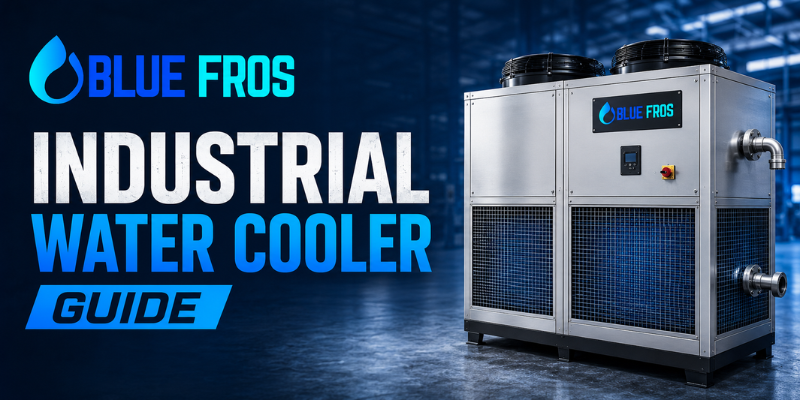
Industrial water coolers play a vital role in maintaining a consistent supply of chilled drinking water in factories, manufacturing units, warehouses, construction sites, educational institutions, hospitals, and commercial facilities. As businesses continue to expand and workforce numbers increase, the demand for reliable and energy-efficient cooling solutions has grown significantly. This Industrial Water Cooler Guide covers everything you need to know about industrial water coolers, including their benefits, types, features, applications, and factors to consider before purchasing one. What Is an Industrial Water Cooler? An industrial water cooler is a high-capacity cooling system designed to provide cold and hygienic drinking water for large groups of people. Unlike standard water coolers used in homes or small offices, industrial models are built to handle continuous operation and higher water consumption. These units are engineered with robust cooling mechanisms, durable materials, and larger storage capacities to meet the needs of demanding environments. Why Are Industrial Water Coolers Important? Providing access to clean and cold drinking water is essential for employee health, productivity, and workplace comfort. In industrial environments where workers are exposed to heat and physically demanding tasks, proper hydration becomes even more important. Key Benefits Include: Continuous supply of chilled water Improved employee productivity Enhanced workplace comfort Better hydration and health Reduced dependency on bottled water Cost-effective long-term solution Environmentally friendly water management Types of Industrial Water Coolers Different industries require different cooling capacities. Understanding the available options helps businesses choose the most suitable system. 1. Storage Water Coolers These units feature a built-in storage tank that keeps a large quantity of water chilled and ready for use. Best For: Manufacturing plants Schools and colleges Large offices Industrial workshops 2. Instant Cooling Water Coolers Instant cooling models chill water as it flows through the system, reducing the need for large storage tanks. Best For: Commercial facilities Healthcare institutions Modern workplaces 3. Stainless Steel Water Coolers Constructed using food-grade stainless steel, these coolers offer excellent durability, hygiene, and corrosion resistance. Best For: Food processing units Pharmaceutical facilities Hospitals Educational institutions 4. Industrial Chilling Systems These heavy-duty systems are designed for large-scale cooling requirements and can support high water demand continuously. Best For: Large manufacturing facilities Construction projects Industrial campuses Key Features to Look For Selecting the right industrial water cooler requires evaluating several important features. Cooling Capacity Cooling capacity determines how much chilled water the unit can produce per hour. Businesses should select a capacity based on daily water consumption and workforce size. Storage Capacity Storage capacity indicates the volume of chilled water available at any given time. Higher storage capacity ensures uninterrupted water supply during peak usage periods. Energy Efficiency Modern industrial water coolers are designed with energy-saving compressors and advanced cooling technology to reduce electricity consumption. Durable Construction A high-quality industrial water cooler should be built using corrosion-resistant materials, preferably stainless steel, to ensure long-term durability. Hygiene and Safety Look for units with food-grade components and easy-to-clean surfaces to maintain water quality and hygiene standards. Low Maintenance Requirements Industrial facilities benefit from water coolers that are easy to maintain and designed for continuous operation. Applications of Industrial Water Coolers Industrial water coolers are widely used across various sectors. Manufacturing Industries Factories often operate in high-temperature environments where workers require regular access to chilled drinking water. Warehouses and Logistics Centers Large distribution centers use industrial water coolers to support employee hydration throughout long working shifts. Educational Institutions Schools, colleges, and universities install water coolers to provide students and staff with clean drinking water. Hospitals and Healthcare Facilities Healthcare institutions require reliable water cooling solutions that maintain high hygiene standards. Construction Sites Construction workers often work outdoors under extreme temperatures, making chilled drinking water essential. Commercial Buildings Corporate offices and commercial complexes use industrial water coolers to serve employees and visitors. How to Choose the Right Industrial Water Cooler Before investing in an industrial water cooler, consider the following factors: Assess Daily Water Consumption Calculate the number of users and estimated daily water requirements. Evaluate Installation Space Measure the available installation area and select a model that fits comfortably. Consider Environmental Conditions Facilities located in hot climates may require higher cooling capacities. Check Power Consumption Energy-efficient models can significantly reduce operational costs over time. Review Maintenance Needs Choose equipment that offers easy servicing and readily available spare parts. Verify Product Quality Ensure the unit meets industry standards for safety, durability, and hygiene. Common Mistakes to Avoid Many buyers focus only on price while overlooking performance and long-term value. Avoid these common mistakes: Choosing insufficient cooling capacity Ignoring storage requirements Overlooking energy efficiency ratings Selecting low-quality materials Neglecting maintenance considerations Purchasing without assessing future demand Maintenance Tips for Long-Term Performance Regular maintenance helps maximize efficiency and extend equipment lifespan. Best Practices: Clean the water tank regularly Inspect cooling components periodically Replace filters when required Check electrical connections Monitor water quality Schedule preventive maintenance Following these practices ensures consistent cooling performance and reliable operation. Future Trends in Industrial Water Cooling Industrial water cooling technology continues to evolve with a focus on sustainability and efficiency. Emerging trends include: Smart monitoring systems Energy-efficient compressors Touch-free dispensing technology Advanced filtration systems Eco-friendly refrigerants IoT-enabled maintenance tracking These innovations help businesses improve operational efficiency while reducing environmental impact. Industrial water coolers are essential for workplaces that require a reliable supply of chilled drinking water. The right system improves employee comfort, supports workplace productivity, and provides a cost-effective hydration solution for years to come. By understanding cooling capacity, storage requirements, energy efficiency, and maintenance needs, businesses can make informed purchasing decisions and maximize their investment. Frequently Asked Questions (FAQs) What size industrial water cooler do I need? The ideal size depends on the number of users, daily water consumption, and peak usage requirements. Are stainless steel industrial water coolers better? Yes. Stainless steel models offer superior durability, hygiene, corrosion resistance, and long service life. How long does an industrial water cooler last? With proper maintenance, a high-quality industrial water cooler can operate efficiently for many years.
commercial water cooler benefits
- admin
- June 16, 2026
- No Comments
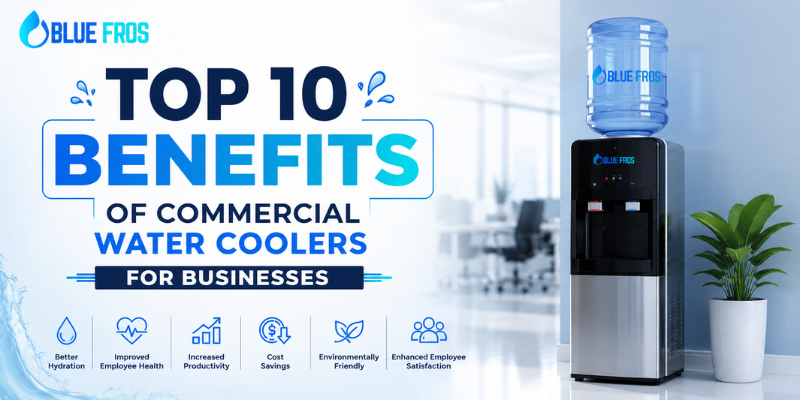
Access to clean drinking water is essential in any workplace. Whether it’s an office, warehouse, healthcare facility, educational institution, or retail space, keeping employees, customers, and visitors hydrated contributes to a healthier and more productive environment. Commercial water coolers provide a convenient and cost-effective solution for delivering fresh, chilled water throughout the day. As businesses continue to prioritize employee well-being and workplace efficiency, commercial water coolers have become a valuable addition to modern workspaces. In this article, we’ll explore the top 10 benefits of commercial water coolers for businesses and why they are a smart investment. Encourages Better Hydration Proper hydration is essential for maintaining energy levels, concentration, and overall health. Employees who have easy access to clean drinking water are more likely to stay hydrated throughout the day. Commercial water coolers make fresh water readily available, encouraging healthier hydration habits and reducing reliance on sugary beverages. Improves Employee Health and Well-Being Hydration plays a significant role in supporting physical and mental health. Drinking enough water helps regulate body temperature, supports digestion, and may reduce fatigue and headaches. Providing employees with easy access to fresh water demonstrates a company’s commitment to workplace wellness and can contribute to a healthier workforce. Boosts Workplace Productivity Even mild dehydration can affect focus, memory, and cognitive performance. When employees stay properly hydrated, they are better equipped to perform tasks efficiently and maintain concentration throughout the workday. A commercial water cooler helps ensure employees have convenient access to water without disrupting their workflow. Cost-Effective Water Solution Compared to purchasing individual bottled water for employees and visitors, commercial water coolers offer a more economical long-term solution. Businesses can significantly reduce ongoing expenses associated with single-use water bottles while providing a consistent source of drinking water. Supports Environmental Sustainability Many organizations are actively working to reduce their environmental impact. Commercial water coolers help minimize plastic waste by reducing the need for disposable water bottles. By encouraging the use of reusable cups and bottles, businesses can support sustainability initiatives and promote environmentally responsible practices. Enhances Workplace Satisfaction Employees appreciate workplaces that prioritize their comfort and well-being. Providing access to clean, refreshing drinking water is a simple yet meaningful amenity that contributes to a positive work environment. Small improvements like water accessibility can help enhance overall employee satisfaction and workplace morale. Convenient for Employees and Visitors Commercial water coolers offer a reliable source of drinking water for everyone in the building. Whether serving employees, clients, customers, or guests, having a dedicated hydration station ensures water is always available when needed. This convenience helps create a welcoming and professional environment Promotes Healthier Beverage Choices When fresh water is easily accessible, employees are more likely to choose water over sugary soft drinks and energy beverages. Encouraging healthier drink choices can support wellness initiatives and contribute to healthier lifestyle habits within the workplace. Low Maintenance and Easy to Use Modern commercial water coolers are designed for convenience and efficiency. Many models offer user-friendly features such as hot and cold water options, filtration systems, and energy-efficient operation. Routine maintenance is generally straightforward, making them a practical solution for businesses of all sizes. Creates a Professional Workplace Environment Providing high-quality drinking water reflects positively on a business. A clean and well-maintained commercial water cooler demonstrates attention to employee welfare and customer comfort. Whether located in a reception area, break room, or meeting space, a commercial water cooler contributes to a professional and organized workplace image. Why Businesses Choose BlueFros Commercial Water Coolers At BlueFros, we understand the importance of reliable hydration solutions for modern workplaces. Our commercial water coolers are designed to deliver clean, refreshing water while supporting productivity, employee wellness, and sustainability goals. Whether you’re managing a small office, large corporate facility, educational institution, healthcare center, or industrial workspace, BlueFros offers dependable water cooler solutions tailored to your business needs. Investing in a quality commercial water cooler is more than a convenience—it’s a commitment to creating a healthier and more productive environment for everyone who enters your workplace. Frequently Asked Questions (FAQs) What is a commercial water cooler? A commercial water cooler is a water dispensing system designed for workplaces, offices, schools, healthcare facilities, and other high-traffic environments. It provides easy access to clean drinking water for employees and visitors. How do commercial water coolers benefit employees? Commercial water coolers encourage hydration, support overall health, improve focus, and contribute to employee well-being and workplace satisfaction. Are commercial water coolers cost-effective? Yes. Commercial water coolers often reduce the ongoing costs associated with purchasing bottled water while providing a consistent source of fresh drinking water. Can commercial water coolers help reduce plastic waste? Absolutely. By encouraging the use of reusable water bottles and cups, commercial water coolers help minimize single-use plastic consumption. A commercial water cooler is a water dispensing system designed for workplaces, offices, schools, healthcare facilities, and other high-traffic environments. It provides easy access to clean drinking water for employees and visitors. Commercial water coolers encourage hydration, support overall health, improve focus, and contribute to employee well-being and workplace satisfaction. Yes. Commercial water coolers often reduce the ongoing costs associated with purchasing bottled water while providing a consistent source of fresh drinking water. Absolutely. By encouraging the use of reusable water bottles and cups, commercial water coolers help minimize single-use plastic consumption. Ready to Upgrade Your Workplace Hydration? Providing fresh, accessible drinking water is one of the simplest ways to support employee wellness, improve workplace productivity, and create a positive environment for visitors and staff. BlueFros Commercial Water Coolers offer reliable, efficient, and cost-effective hydration solutions for businesses of all sizes. Contact BlueFros today to discover the right water cooler system for your workplace and experience the benefits of cleaner, healthier hydration.
- 1
- 2